- The Backroom Staff
- Posts
- The Backroom Staff - Academy Director: Etienne Vella
The Backroom Staff - Academy Director: Etienne Vella
Building sustainable structures in Maltese football

Nik
January 08, 2026
Academy Director: Etienne Vella
Building sustainable structures in Maltese football
2025 saw several historic moments in Maltese football, with Hamrun Spartans becoming the first club from Malta to reach the group stage (league phase) of a UEFA competition and the women’s national team earning promotion to Nations League B. Improved infrastructure, coach education and increased exposure (and revenue) through new UEFA competitions have helped several of Europe’s smallest nations close the gap on traditional football powers - Malta may be next.
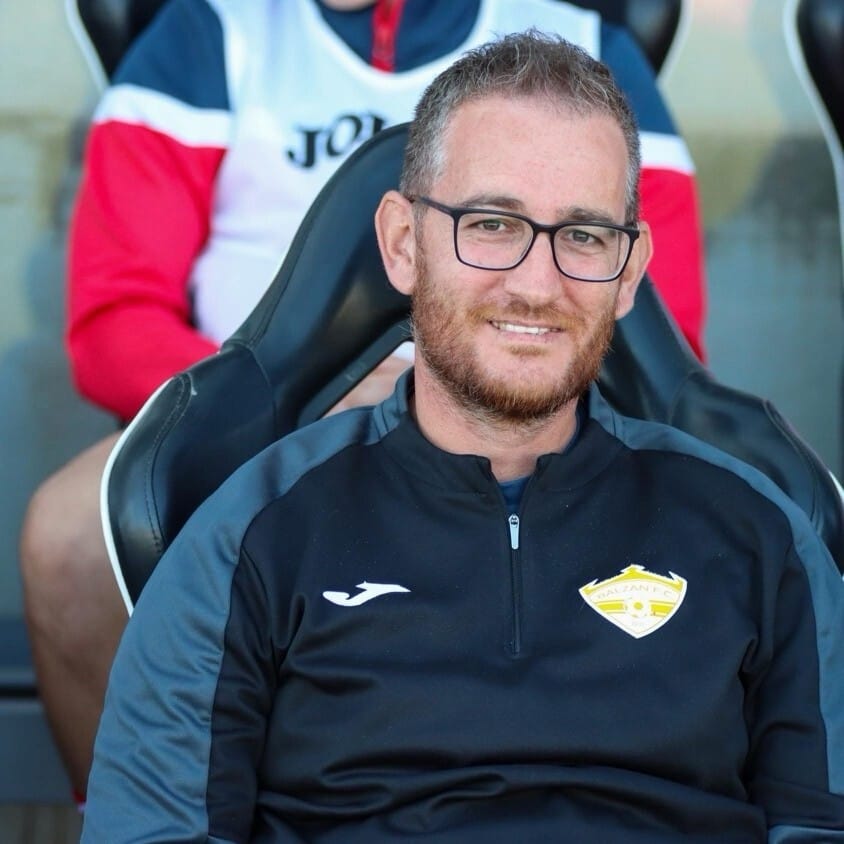
Etienne Vella is among a small group of Maltese coaches to have completed the UEFA Pro Licence, with experience spanning youth development, academy leadership, match analysis and senior football. In his current role as Academy Director at Balzan FC, he is focused on contributing to the professionalisation and long-term growth of football in Malta. His work was recognised last year, when he was named Malta Head Coach of the Year for the 2024/25 season.
In this interview, Etienne reflects on his journey from grassroots youth football to the professional game, the realities of balancing elite coaching with a full-time career outside football, and the current state - and future direction - of football in Malta.
The interview has been condensed and lightly edited for grammar and clarity.
Read on thebackroomstaff.com
[ Did you have a playing career? ]
I never really had the footballing talent to reach the very top as a player, and an ACL injury certainly didn’t help either. But my interest in coaching was always there. From a young age, I followed and studied every coach I worked with, trying to learn as much as possible from each of them. Deep down, I always knew that I wanted to become a coach.
[ Career in football ]
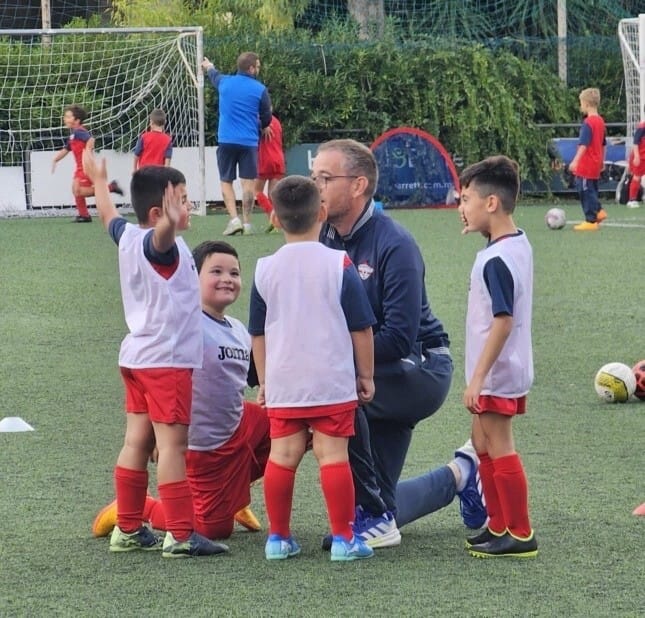
I started coaching at around 24 years of age, initially helping a friend with his U7 and U8 teams at Naxxar FC. I loved it immediately and knew I wanted to pursue a career in coaching. From there, I began working through my coaching badges and continued coaching the youngest age groups. After two years, I progressed to working with the U14s and U15s.
Over seven years at my first club, I had the opportunity to coach across all age groups, from U7 up to U15. During that time, I completed my UEFA C and UEFA B coaching qualifications.
I then moved to a bigger Academy, San Ġwann FC. The players were better, expectations were higher, and there was more pressure — not to win matches, but to develop players capable of making the step up to the senior team. It was another steep learning curve. I started with the U14 and U15 teams, later coached the U21s, and also worked as assistant coach and match analyst with the senior team. Over a five-year period, more than 25 academy players made their senior team debut. During this time at the club, I also completed my UEFA A licence at the age of 30.
My next move was to a Premier League club, Pieta’ FC, where I worked as a match analyst and U21 coach. The club placed a strong emphasis on youth development, which suited me perfectly, as I was once again involved in helping young players progress to the senior team.
During my time at San Gwann FC and Pieta’ FC, I saw a lot of youth players being selected for the National Teams from U15 up to U21.
My most recent move was to my current club, Balzan FC, where I have been for the past three years. I held two roles: match analyst for the senior team and Academy Director. With the senior team, I had the opportunity to also be involved in UEFA Conference League matches. At academy level, it was a major project and a complete overhaul. We grew the academy from 200 to 330 players, and from 20 to 45 coaches in a period of 2 years. Now we embark on the next phase of growth within the Academy.
During this period, I have just completed my UEFA Pro Licence at the age of 41.
[ You’re still balancing your football work and your day job as an auditor - is part-time still the norm in Maltese football? ]
Part-time roles are still the norm in Maltese football, although this is slowly changing. At Premier League level, roles within senior football are becoming increasingly demanding, and we are starting to see more full-time positions being introduced. This is less common within academies, despite the significant workload required to properly manage and develop them.
If the right opportunity were to come along, or if the workload continues to increase, then a difficult decision would have to be made about moving into a full-time role in football. That decision would certainly be easier if an opportunity abroad became available.
[ Do you feel a risk of burnout? ]
Yes, there is always that risk. The demands are significant, and there are periods where it feels like you never really switch off. Coaching, analysis, managing people and leadership all carry a mental and emotional load. So far, though, I’ve been able to manage it both physically and mentally, largely because of the support system around me. My family keeps me grounded, and having trusted colleagues to share responsibilities and ideas with makes a huge difference. Without that support, it would be much more difficult to sustain the level of work required.
My family keeps me grounded, and having trusted colleagues to share responsibilities and ideas with makes a huge difference
[ You’ve recently done the UEFA Pro License - what’s the biggest value of this course? ]
First of all, it reinforces the idea that you should never stop learning, because you can never know enough. Football is constantly evolving, and coaches must evolve with it if they want to stay relevant and effective.
Secondly, the opportunity to interact with other coaches is invaluable. Being able to exchange ideas, share knowledge, and learn from each other’s experiences adds depth to the course that goes beyond theory and formal education.
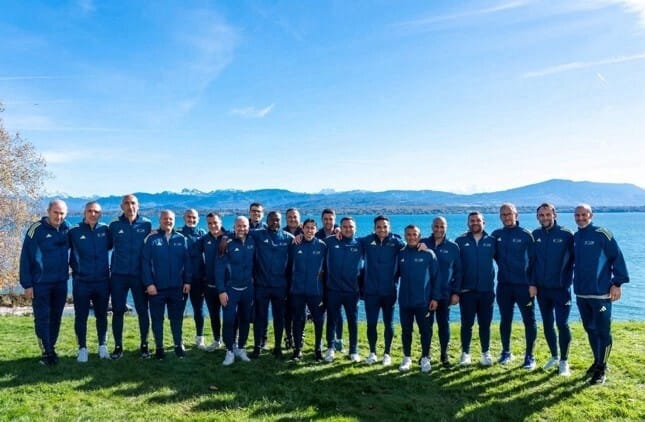
Etienne with his UEFA Pro classmates in Nyon, Switzerland
[ You’ve moved into a non-coaching role as Academy Director – why? ]
I believe that if Maltese football is to genuinely move forward, reform has to begin at academy level and from the top down. Talent alone is not enough; structures, standards, and long-term planning are just as important. My academic background and experience outside football made me realise how much untapped potential there is locally if clubs are better organised and more strategically aligned.
The Academy Director role allows me to influence key areas that often determine whether young players succeed or fall short — governance, infrastructure, coach education, and clear development pathways. These are areas where Maltese football can make significant progress if there is the courage to modernise and raise standards.
We’ve already implemented meaningful changes at Balzan FC Academy, and there are more ambitious projects planned that aim to professionalise the academy environment and better prepare players for the demands of senior football. Ultimately, I want to contribute to a system where more Maltese players are given a real opportunity to progress, both locally and beyond.
That said, coaching on the pitch remains central to who I am. Working directly with players is still my favourite part of the role and keeps me connected to the core purpose of development.
Talent alone is not enough; structures, standards, and long-term planning are just as important
[ What are the biggest challenges for Maltese Academies? ]
Football is by far the most popular sport in Malta, and in recent years, significant progress has been made. Investment in the sport has increased, particularly at the senior team level. The Malta Football Association has also prioritized infrastructure development, ensuring that nearly all clubs have access to training grounds with artificial turf. Coaching education is widely available, with regular courses organised for coaches, team managers, and administrators.
Despite these improvements, the next step for Maltese football requires a strategic approach involving all stakeholders – the government, the Football Association, clubs, and other key partners.
Some of the main challenges facing Maltese academies include:
1. Facilities: While much has been achieved, high-quality facilities are still unevenly distributed, and many clubs struggle to maintain top-level training environments.
2. Finances: Resources are limited, and with so many clubs operating on the island, funding is often spread too thinly to sustain high-performance programs.
3. Talent Pool: Malta has a small population, and talent is dispersed across numerous clubs, making it difficult to concentrate and develop the best players effectively.
4. Club Culture and Structure: Transitioning from a football school or nursery to a professional academy is challenging. Many clubs lack the infrastructure, expertise, or long-term vision required to operate at a high level.
Another common issue is that many times we (coaches, parents and clubs) are giving too much importance to the results instead of the developmental progress of youth players.
In essence, the Maltese football ecosystem is currently fragmented. Difficult decisions may be needed – such as consolidating resources or redefining club structures – to ensure that academies can provide elite development pathways and take Maltese football to the next level.
[ Does Malta have a recognizable ‘football identity’? Should it? ]
Yes, I would say Malta does have a football identity, although it’s still evolving. Traditionally, Maltese teams have been very defensively focused, prioritizing organization and making sure not to concede too many goals. This was particularly noticeable before Italian coach Devis Mangia took over the national team.
When Mangia came in, he introduced a more attacking approach. He emphasized high pressing, building from the back, and proactive attacking principles. His influence has been significant, with many local coaches starting to adopt some of his ideas in their own teams.
Since his departure, the national style has slightly changed, but the push toward possession-based, attacking football continues. As a nation, it is important that we try to find the right balance and really develop a football identity that reflects modern principles while being true to our strengths.
it is important that we try to find the right balance and really develop a football identity that reflects modern principles while being true to our strengths
[ How have new UEFA competitions (e.g. Conference League and Nations League) impacted football in Malta? Does the relative success of Iceland and the Faroe Islands provide a model to borrow from? ]
Hamrun FC was the first club in Maltese history to reach the Conference League stage, and that was a historic achievement for local football. It gave them the chance to play against bigger European clubs, brought more exposure to Maltese football, and generated additional revenue for the club. This success did not happen by chance. The club’s President has invested significantly over the past years, and the club is now reaping the rewards of that long-term commitment. Hopefully, this can inspire other local clubs to follow a similar path, allowing more Maltese teams to progress further in UEFA competitions.
On the national team side, we are just one step away from winning promotion to the Nations League C, with a decisive double encounter against Luxembourg coming up. The level of the national team has improved thanks to more players gaining experience abroad and the inclusion of eligible players with dual citizenship.
I believe Malta can follow the examples of Iceland and the Faroe Islands, but it cannot happen overnight. Achieving that level of success requires a holistic, nationwide strategy, from grassroots football all the way up to elite senior teams. It demands patience, a long-term vision, and coordination among all stakeholders.
If we can raise the level of football in the country, several things will follow: more young players will have opportunities to play abroad, the Maltese league will attract greater international attention and investment, and more local players will compete at higher levels. In the long run, this is how Malta can gradually build a sustainable, competitive presence in European football.
[ Malta’s women’s national team was recently promoted to Nations League B - how has this impacted football in Malta? ]
Women’s football in Malta is a great example of progress in our game. While the level of domestic competition may not yet be as intense as in men’s football, a growing number of Maltese female players are gaining experience abroad, particularly in countries like England and Italy, and even at top clubs such as Inter Milan and Sunderland.
Many of our national team players now compete in professional environments with fully professional setups. Even younger players, who haven’t yet broken into senior teams at home, are already playing abroad. This international exposure gives Malta a real competitive advantage, helping our players develop faster and raising the overall standard of women’s football in the country.
[ Ambitions for the next steps in your career? ]
I still consider myself relatively young, and I’m extremely grateful for everything I’ve already achieved in my career so far. At the same time, I’m ambitious and always looking for ways to improve. I don’t have a rigid long-term plan; I prefer to take things step by step, focusing on opportunities that will allow me to grow and make a real impact.
One of my next major goals is to gain experience abroad in a fully professional setup, where I can work with high-level players, coaches, and analysts. I believe that exposure to different football cultures, methodologies, and challenges will help me become a better coach and analyst. I want to expand my understanding of the game, learn new approaches, and develop skills that I may not be able to acquire locally.
In the long term, my ultimate ambition is to bring that knowledge back to Malta. I want to contribute to making Maltese football stronger, more competitive, and more structured—from youth academies to senior professional teams. I hope that the experience I gain abroad will allow me to help shape future generations of players and coaches and to give back to the country that has given me so much. My dream is to see Maltese football develop sustainably and to play a role in taking it to a higher level than it is today.
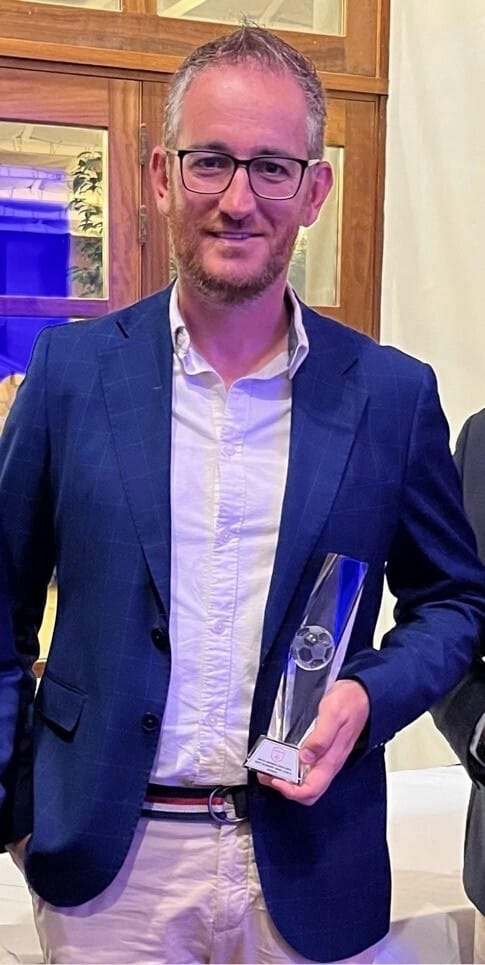
Etienne with the Malta Head Coach of the Year award for 2024/2025
Follow Etienne on LinkedIn and let him know you enjoyed the interview!
Have comments, questions or want to have your story featured on The Backroom Staff? send us a message or simply reply to this newsletter, we'll read it!
Read more interviews on The Backroom Staff 🙂
1